Conversation: Archive of Cruising Spaces, with Tonči Kranjčević Batalić (series: Co_Lab #1)
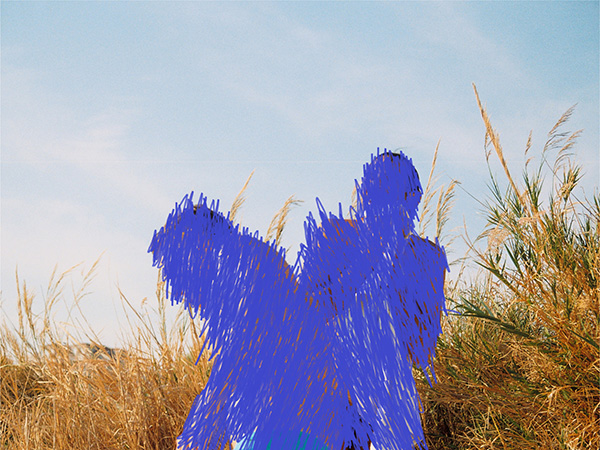
A still from the documentation of "(ne)vidljivi tragovi jedne povijest" ("(in)visible traces of history") research project, Nova Điga, © Tonči Kranjčević Batalić, Marko Gutić Mižimakov
Last edited on: July 24, 2026
Premise
The first collaboration within our research project (Co_Lab #1) was designed as an ongoing workshop, i.e. a series of exchanges, meetings, and reflections among a small group of researching artists whose practices combine critical archive research with different forms of community-building activity. Culminating in September–October 2023, Co_Lab #1 ended with a sequence of four week-long workshops, followed by an exhibition at Vienna’s Exhibit Eschenbachgasse. In each week, we zoomed in on 2–3 artists/researchers participating in Co_Lab #1, dedicating each Wednesday for a public presentation, during which we would facilitate a context for an exchange between these artists/researchers and our Vienna-based friends and colleagues.
The following transcript documents the recorded conversation between Tonči Kranjčević Batalić, Guilherme Maggessi, and Rafał Morusiewicz, conducted on September 6, 2023. The transcript has been condensed and edited for concision.
Guilherme Maggessi
Can you tell us about the beginnings of queerANarchive? How did it all start? How has queerANarchive become what it is now?
Tonči Kranjčević Batalić
queerANarchive started from my interest in cruising places in Split and my own participation in cruising culture. Me and my friends (Zvonimir Kontrec, Tomislav Jerić, Igor Mušić, to name just a few) would spend time in the cruising parks and beaches. Around the year 2010, there was a lot of private-interest attention to public spaces, such as city squares, national parks, and other cultural spaces. Publicly-funded urban revitalizations became another threat to such spaces, which started shrinking and were about to disappear. This rapid loss of public spaces became the topic of activist actions, as well as cultural and artistic initiatives, so, I guess, this gave me a push in terms of both realizing the fragility of cruising places and deciding to do something about it. That’s how the idea behind the project came about. Though thinking about it now, I don’t remember exactly when I visited these places for cruising and when for research, maybe apart from the “Cruising Expeditions,” during which we collected the artifacts. But that was later. At the beginning, I started writing blog entries about cruising places in Split, with photos, texts, and videos, made sometimes with the help of my friends. Later, after queerANarchive formally became a NGO organization in 2013, this turned into a funded project, in which we produced cruising-related artwork, videos, booklets, and exhibitions. We started from the focus on organizing workshops in relation to cruising expeditions. Then we started collaborations with various artists. With the project, an important issue was finding a way to talk about these places and practices, and thus making them part of our memories and histories, while recognising their fragility and respecting the rules of discretion and invisibility. This eradication of public spaces endangered not only these particular cruising spaces but also cruising as a practice. And not only were these spaces in danger of being erased. At the same time, creating a buzz around them would also jeopardize their existence: cruising spaces function as a hidden haven for the local gay community, which still deals with unwelcoming and unfriendly social attitudes. Being invisible is at the core of the practices and the spaces they form. So cruising spaces are generally fragile because cruising practitioners would probably not fight for them: for them, this would be an act of coming out, which most of them would not want. So organizing a public demonstration in defense of such places would be detrimental to them in the same way as the threat that we identified and wanted to fight against. In this way, the whole community that formed around these practices could disappear if, let’s say, someone wanted to build a hotel on a spot which was a cruising space. Another factor was that it was also the time of a cultural shift for the LGBTIQ community and the rise of local LGBT activism, coinciding with the popularity of dating apps. All this made a big impact on what it meant to be a gay or queer person in Croatia. Cruising places were gradually becoming relics of the past: still a necessity for some, but one option out of several for the others.
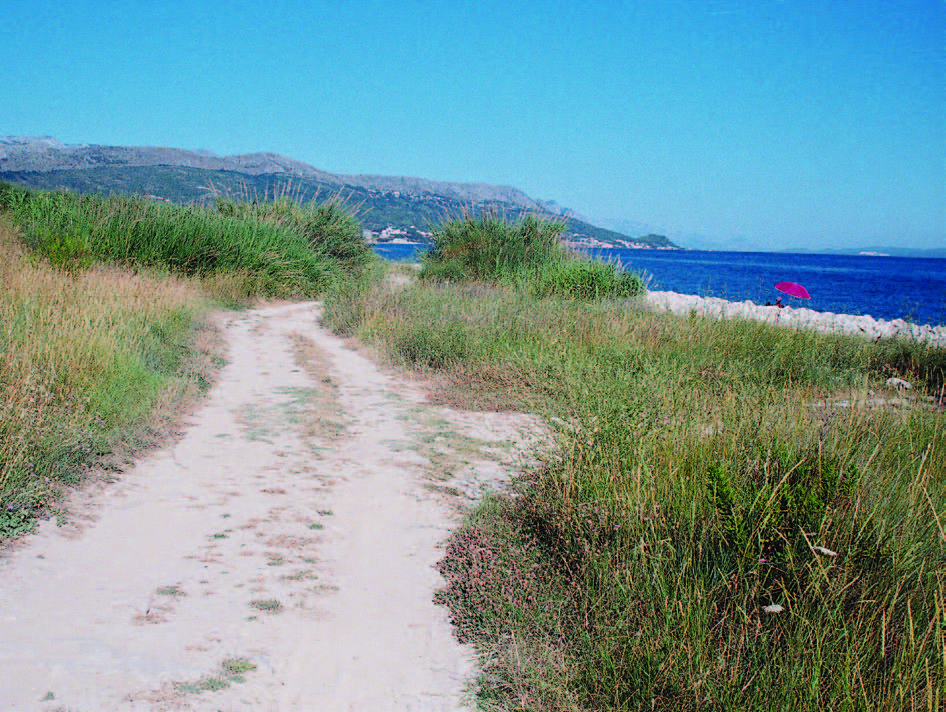
A still from the documentation of the "MEĐUPROSTORI [PEDERLUKA]" artistic-research project (2016) © queerANarchive
Rafał Morusiewicz
Did you think of such spaces as spaces of culture or community production in a sense?
Tonči
When talking about cruising places?
Gui
Yes.
Tonči
Cruising spaces are definitely places of community production. And the other way around: they do not exist without the community, without the practice of cruising that occurs in abandoned, marginal places outside the city’s main routes. Certainly in the past, to a lesser extent now, cruising spaces were one of the few places where gay people could freely meet. And such meetings of people that recognize themselves in others are crucial in the production of a community, in the sense of belonging. It was interesting for us to reflect on how social relations are formed in such spaces and how we, as a queer community, can learn from them. And these social relations were radically different from the ones promoted by mainstream LGBT activism.
Rafał
When you started the cruising project, was it immediately clear to you that these cruising spaces would anyway disappear and the only thing you could do was to try to preserve their traces? Or was there any hope that they could be somehow sustained? We’re thinking of this paradox that having people protest for cruising spaces would automatically make them more visible.
Tonči
It depends. At that time, there was no immediate threat, like investment plans, to the cruising spaces in Split. But recently, for example, the whole gay beach was permanently lost due to the city’s redevelopment. The intention behind this research project was not so much about direct citizen action, about mobilizing people for the fight against the public- or private-capital redevelopment of the public spaces that happened to be cruising sites. At the beginning of the cruising research project, this loss was not yet imminent. Initially, we focused on mapping the cruising spaces and reflecting on the idea of the identity of such spaces, formed through the practice, about the community around them, and about the political potential of such spaces and practices. We started by producing texts, artistic works, and exhibitions. What we realized while doing the research though was that our project was directed toward preserving traces of the very existence of cruising spaces and practices that had been disappearing without being documented.
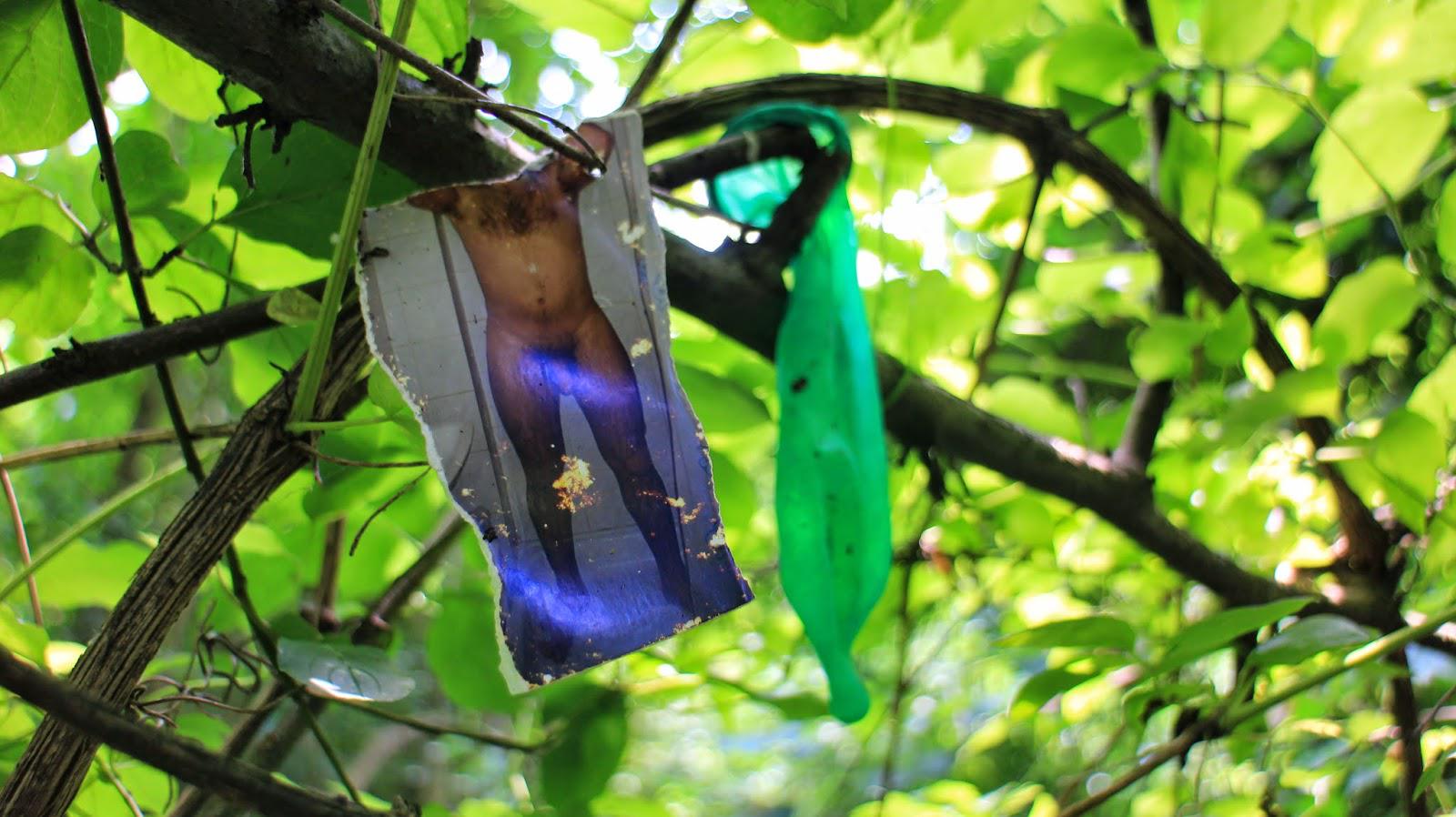
A still from the documentation of the "interspaces [of faggotry]" artistic-research project (2014) © queerANarchive
Rafał
When we did the workshop in Split in June, you brought the images of photographs that were partly torn so that the people photographed would have only torsos, and their heads would be removed.
Tonči
After queerANarchive became a formal NGO, one of the first funded research projects was “Cruising Expeditions,” with which we visited cruising spaces in Split and Zagreb. Through these expeditions, we collected information and other material about the cruising spaces, which we later used to produce an exhibition and a book. The photos that you mentioned were attached to a tree branch at a cruising spot at Jarun in Zagreb. There were a few of them. They looked like photos from a family album, except that the person in the photo was nude and the part showing the head was torn off. They were a curiosity among the artifacts that we collected: we mostly found the expected material left by people who were cruising and hanging out in nature: used condoms, handkerchiefs, cigarette butts, empty bottles. We found such photos only once, in one spot. We asked around, but no one knew anything specific about them. A few years later, while I was involved in another research project, I figured that these photos could have something to do with the way people communicated with each other. The project went back in history, and it explored how gay men in Split and Zagreb in the 1980s–1990s would find sexual or romantic partners, how they would get in touch and communicate with each other. A lot of such communication happened through personal ads in magazines, erotic or not, where people would send photos, similar to the ones that we found at a cruising spot at Jarun. At some point, I thought that maybe these photos had something to do with how people used to exchange photos via snail mail, that maybe someone used it in a cruising space, as if to say, “Hey, I was here, you may find me here…” I never managed to confirm this Also, this could have been an isolated case, we never found similar photos in any other cruising space.
Rafał
At first, I didn’t think that it was about being protective of the people in the photographs, but I read it more as a threat, something like a death threat.
Tonči
I guess you are familiar with dating apps. Even today not everyone shows their face, which probably has something to do with the shame that is imposed on the gay community. It is similarly, or even more, present in cruising. The real threat would be leaving a photo with someone’s face on. Not showing a face or cutting it off from a photo is a gesture of discretion.
Rafał
What other things did you collect?
Tonči
Condoms, mostly used condoms. For this research project, queerANarchive was joined by Vladimir Tatomir from Kontraakcija, an organization from Zagreb that did a kind of contemporary archaeology in urban areas. He applied a method of “sounding,” borrowed from archeology, which consisted in defining a square meter of space and collecting everything from this area. Kontraakcija did this in parks located in bigger neighborhoods and collected everything that was on the ground around the benches. Based on these findings, they drew conclusions about the daily practices of the people living in the neighborhood. In the “Cruising Expeditions” project, we applied this method by visiting in groups cruising spots and collecting everything into plastic bags, together with the date, location, and description of anything specific. Apart from condoms, we found cigarette butts, bottle caps, lighters, and small paper slips that people carry in their pockets and then discard or lose. With these findings, we created an exhibition, “[Inter]spaces of faggotry,” which took place in Galerija Praktika in Split and LGBT centar in Zagreb in 2015.
Rafał
How did you systematize the findings? Did you use one bag per condom, or one bag per everything you would find during one day? Did you use bags of different sizes or always the same size? Do you remember that?
Tonči
We put each thing into one bag. We had small plastic zip bags for freezing food, the ones that are used in the kitchen. We had two different bag sizes. We also made tags, which we attached to each bag, together with the info about the finding and the location. In the end, we had hundreds of bags. For the exhibition, we placed them on tables and arranged them so that people could read each tag and see what was inside.
Rafał
You mentioned once that, for some time, you had these bags at your place, that you stored them under your bed. Do you know what happened to them in the end? Did you throw them away?
Tonči
Honestly, I don’t know what happened to them. That’s another thing: our organization is called queerANarchive, but we are not an archive in the conventional sense. We don’t have a space to store things, so we don’t collect anything. All the artworks and other exhibition materials that we produced eventually would end up in my room, under my bed, that was when I still lived at my parents’ place. But then I moved to another flat. I remember packing them, but I do not know where they ended up. Somewhere in the office, in the new flat, or in the basement? I don’t know.
Rafał
So they may be somewhere…
Tonči
Or they may be lost. But I don’t see it as a big loss. There’s information and photo documentation about the project on our website, we also made a booklet. Some people also wrote texts about the project. In the end, we found it more important to have a discussion than to trace the location where parts of the project have been stored ever since it ended.
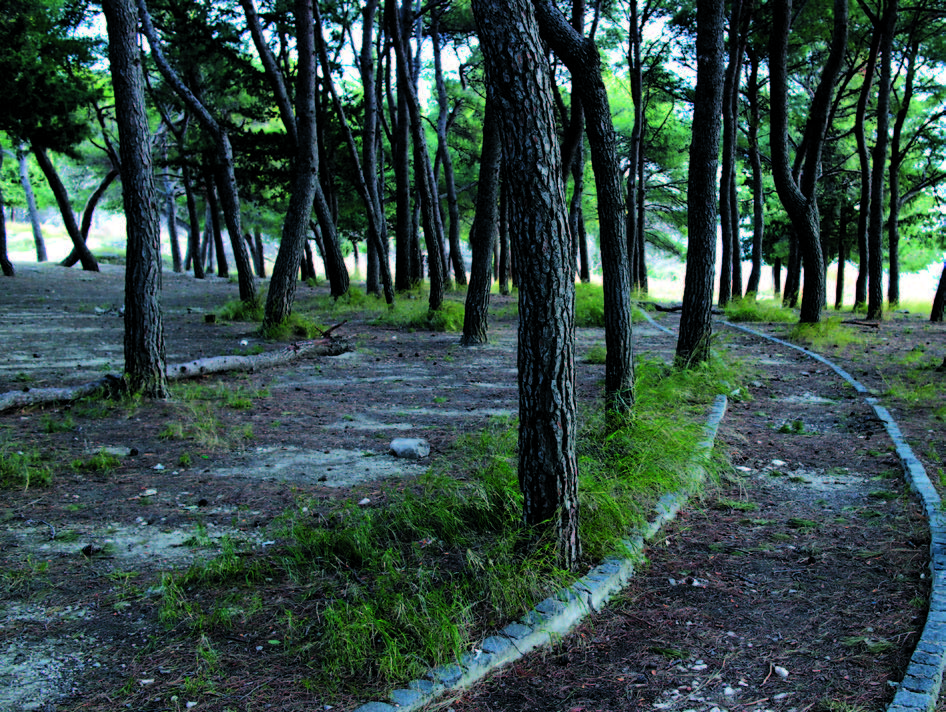
A still from the documentation of the "MEĐUPROSTORI [PEDERLUKA]" artistic-research project (2016) © queerANarchive
Gui
Just to go back to the cruising project: I was wondering if the cruising spots that you included in the project were still cruising spots back then? Did you have any encounters or exchanges with other people in the cruising community?
Tonči
The project was about cruising practices that were happening at the same time when we were doing our research. This means that the condoms that we found must have been recently used. In terms of finding information about cruising, our approach was to talk to people who practiced it. We met some of them at the cruising spots, we found some others online or through acquaintances. Some of the people knew that we were doing research, and not everyone was excited about it. There is this rule of discretion: you cannot talk about the cruising spaces, they need to be kept secret. And our research respected it, at least to a degree. The idea that we had in this project was to generate maps of cruising spaces, based on the actual cruising practices. While being at a cruising spot, we would turn on GPS, through which we would map our movement. Then we would send the recorded data to cartographer Antun Sevšek, who transferred the data into the elements of a map: a dot, a line and a surface. The map represented our movement, marking places where people had sex, where many condoms were found, where people would encounter each other, and what routes they would follow. The map showed places of encounter, where you would meet someone and negotiate whether or not you wanted to have sex, as well as the spots where people had sex either in hiding or more visible on purpose. Due to discretion, we did not overlay our generated maps onto the actual city maps, so it was impossible to identify the exact location of the cruising spots.
Gui
I have a few thoughts, and I don’t know which to choose first. I thought of what you said about not knowing where the condom bags are. When I went through the transcript of our March conversation, I paid attention to what Mika Maruyama said about destroying, or maybe burning, everything that remained of her childhood room. She said that her parents were against this idea, that they wanted to keep some of her stuff. And for her, it was important to deliberately erase everything. This reminds me of how you said, during this conversation, that your intention is never to “burn the archives.” I wondered: queerANarchive is not a conventional mainstream space that archives things, where you would have boxes of stuff that are stored in specific conditions so that all the objects are preserved as long as possible. Your interest in archiving does not focus on the idea of paying most attention to singular objects, to specific condoms in these specific bags, or to how exactly they are classified. The focus is elsewhere. I am curious if this is something that you already knew while you were doing the projects, or if it is something that you noticed retrospectively, i.e. that your approach also comes out of necessity, out of the lack of a big space where you could store everything.
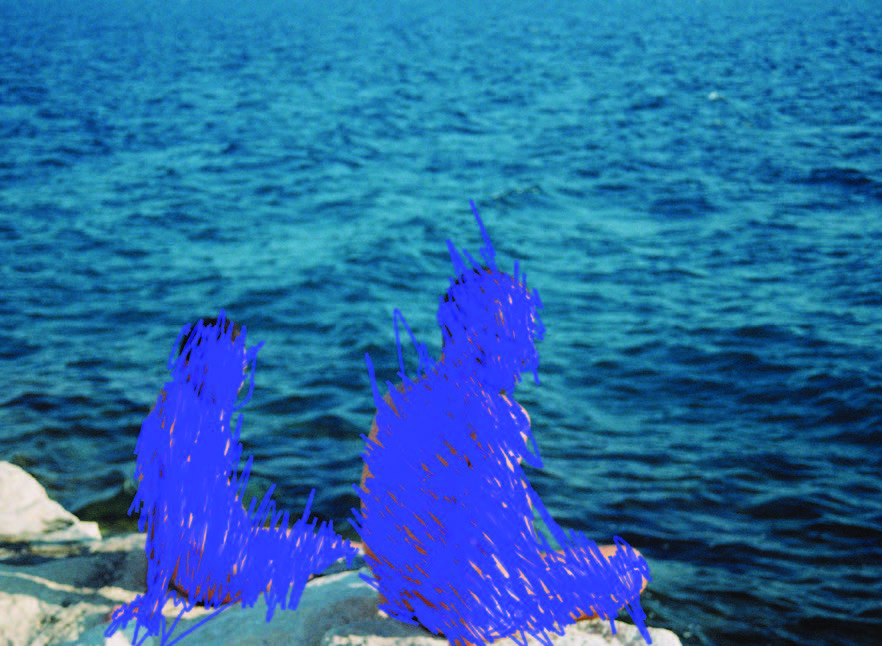
A still from the documentation of "(ne)vidljivi tragovi jedne povijest" ("(in)visible traces of history") research project, Nova Điga, © Tonči Kranjčević Batalić, Marko Gutić Mižimakov
Tonči
Both. I do not remember ever considering the idea of running a physical archive. In this case, choosing archival practices was part of the critique of the official archives that omitted LGBTQI+ and queer histories. However, our intention was not creating another archive. This is also connected to other conditions of doing research: limited funding, lack of space. Archival material and research-based methodologies were the only tools to deal with something that was relevant to us at that moment. We didn’t have the need to treat the findings as archival material to be stored and conserved, but, at the same time, we wanted to leave traces: we did insist that these two art-research projects, [Inter]spaces of faggotry and (in)visible traces of a history concluded with booklet publications, including texts and photos that documented everything we had done. It was important that these booklets were “properly” published, i.e. that they had ISBN and CIP numbers with which they would be included in the national and university library funds. We wanted to make these publications widely accessible and therefore to make them part of official archive histories. But there is another important context for these research projects, as they happened around the time of Split’s first Prides in the early 2010s. This was the time of advocating for same-sex partnerships and marriage equality, which seemed quite heteronormative from a cruising perspective. Talking about cruising practices seemed a way to talk about the multiplicity of relationships outside heteronormative or nuclear family models. Maybe this aspect was not fully articulated, but looking back at those times, I can say there was a certain feeling of a loss of certain models of being gay, as well as of cruising as a practice that had formed the gay community for decades or even more. And now we are back to archives because a loss of something, or a feeling that something might be lost, pushes us to archive it.
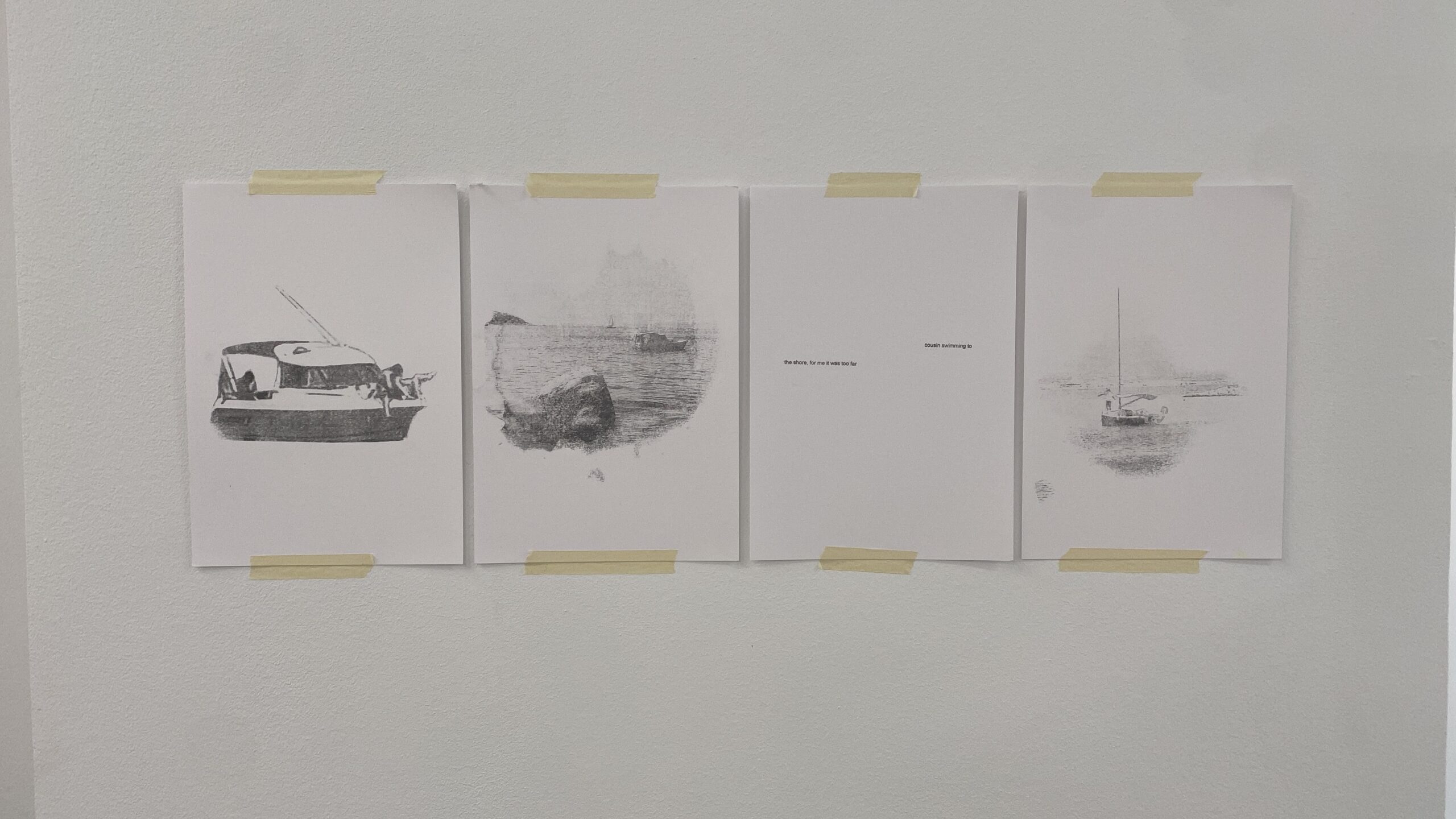
A still from the documentation of Tonči Kranjčević Batalić's "boats" artwork, part of the exhibition "An Archive, a Body, an Album, and a Story" at Vienna's Exhibit Eschenbachgasse (02–06.10.2023), © Tonči Kranjčević Batalić