Conversation: “My father’s life was quite unconventional,” with Alice Reder (series: Oral History, English version)
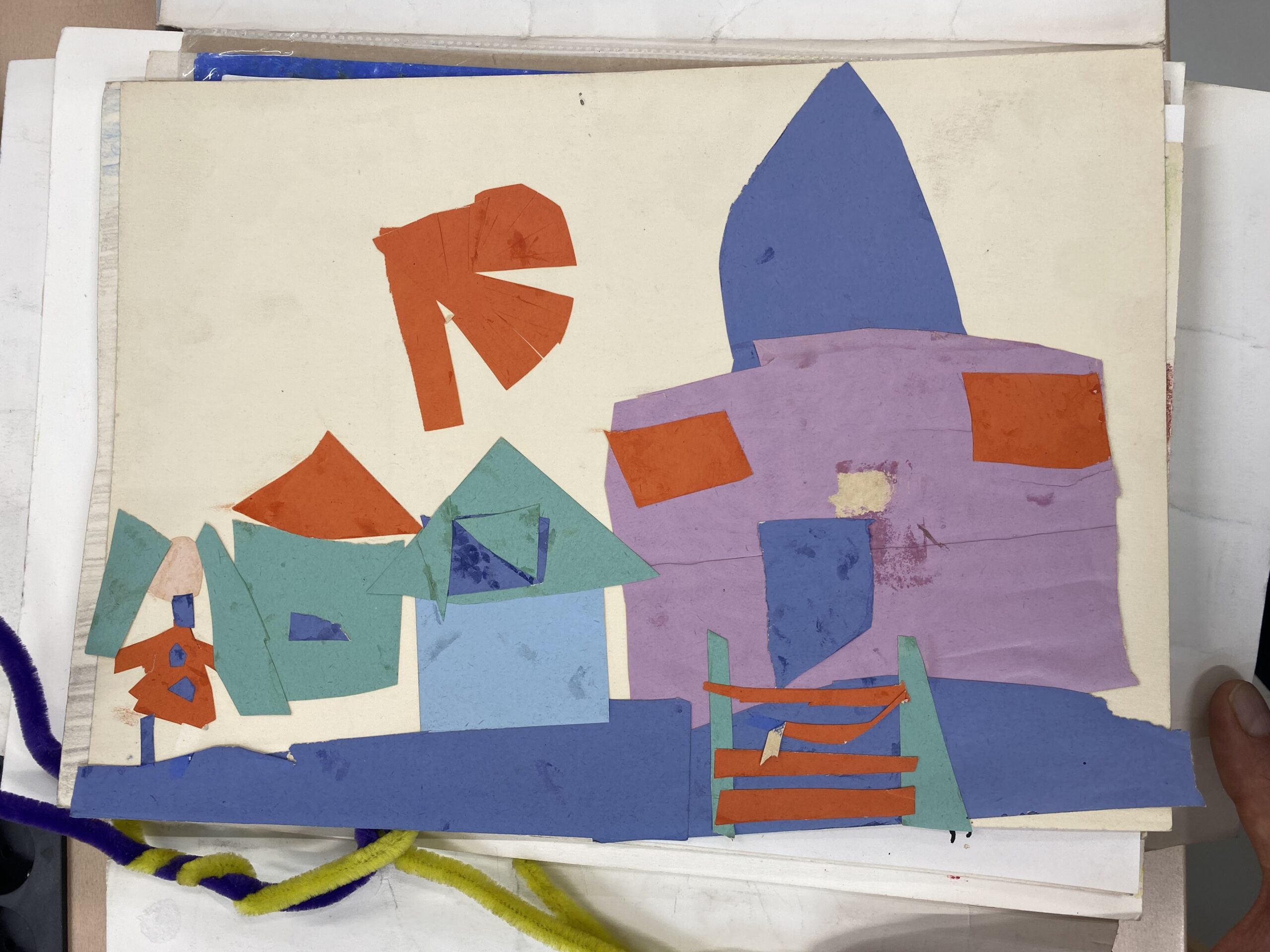
A photo of Alice Reder's childhood artwork, a still from the audiovisual documentation of Reder's holdings, shared by Alice Reder and stored at QWIEN, © Guilherme Maggessi, Rafał Morusiewicz
Table of contents
Last edited on: August 11, 2026
Introduction
This conversation with Alice Reder was recorded in Warsaw in XX.XX.2024 originally in Polish. It was edited for clarity and divided in thematic sections by Rafał Morusiewicz together with Alice Reder.
For the original Polish transcript, follow the link below:
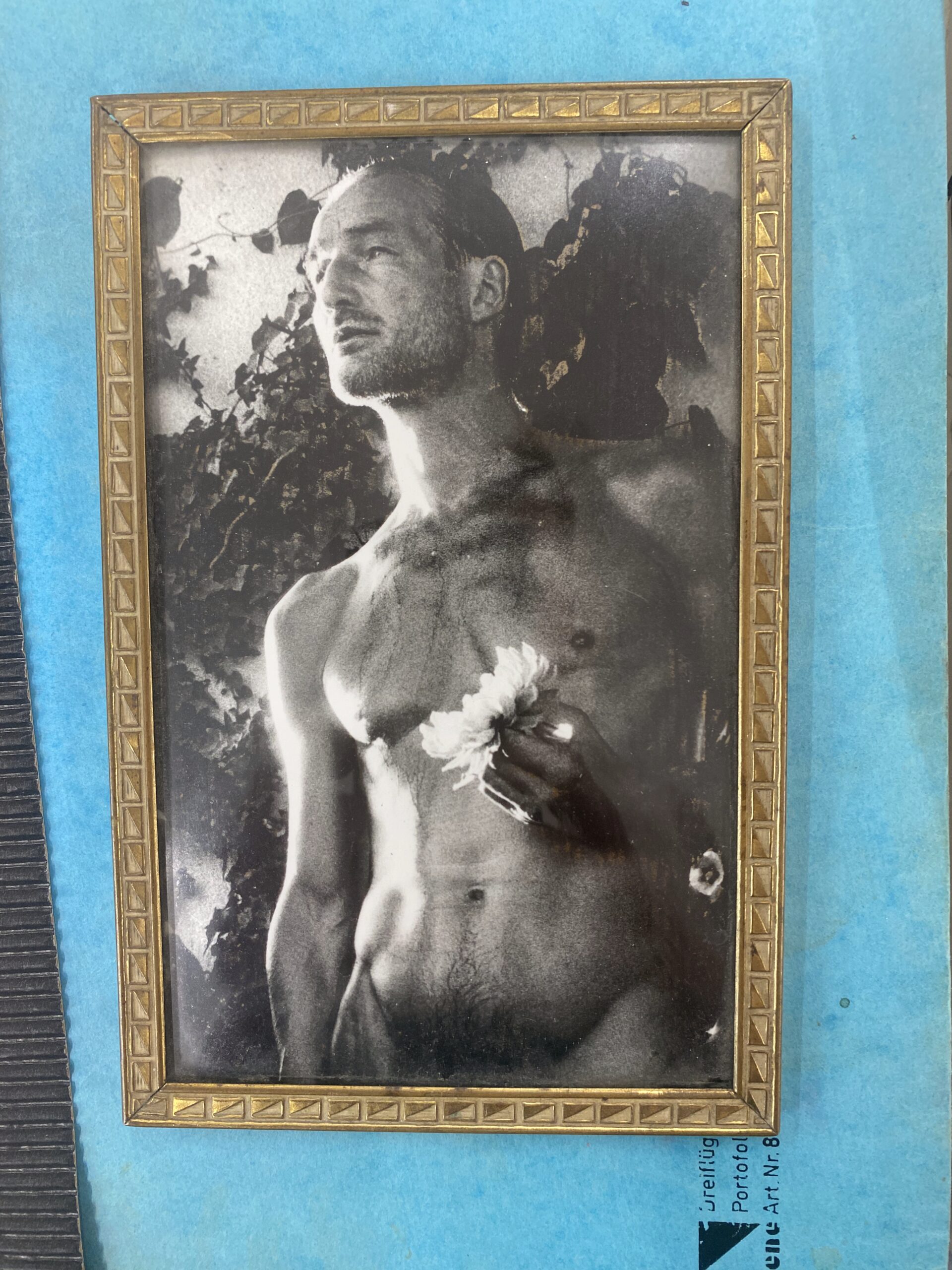
A photo of Wolfgang Reder's portrait, from the documentation of Alice Reder's collection of her father's estate, stored at QWIEN, © Guilherme Maggessi, Rafał Morusiewicz
Early years in Poland
My father’s life was incredibly interesting and, for the time, quite unconventional. He was raised in Vienna, in a wealthy, middle-class family. His mother was an elegant Hungarian woman who wore beautiful designer clothes, loved opera, and spoke several languages. His father was a “rough-hewn” Austrian entrepreneur with right-wing views. He and my father were never particularly close.
Dad lived with his parents in Vienna’s residential area. He attended a French high school. His friends came from wealthy families. He vacationed with his parents in Italy. He rode horses. He went to balls at the Viennese Opera. He had beautiful girlfriends, he himself was very handsome. However, already as a teenager, he was tired of the world of the wealthy bourgeoisie. He craved something else: freedom, imagination, a different vibe. He found it in Poland. He came to do horse-riding at a school in Poland in the early 1970s. He was soon to graduate from his studies, he was studying architecture in Germany. At this school, he met my mother, who had been organizing riding lessons for foreigners. And so began my parents’ intense love affair. My mother was a beautiful divorcee with a 10-year-old daughter, she had been educated as a farmer. My father was sixteen years younger than her, and he didn’t speak a word of Polish. He had no idea what life was like in a communist country. They got married. The wedding supposedly lasted a week, moving each day to a different horse farm. Then they left for Germany, to Aachen, where my dad was finishing his studies. Three years later, I was born. It was a surprise for my dad, because apparently my mom had claimed she couldn’t have any more children. My mother missed Poland and persuaded my father to move to the Polish countryside.
My father fell in love with country life: he learned to milk cows, raised horses, mowed the grass with a scythe, and took care of tourists. These were difficult times, with shortages of many basic necessities. I remember reading my father’s letters from Poland to my grandmother from that period, where he writes: “Mom, everything is fine here. Could you send Krysia some comfortable shoes? I’d like to make preserves for us, so maybe you could also add a few kilos of sugar? And for Alisia, since she has teeth issues, maybe some fluoride toothpaste?” My grandparents were shocked by my father’s decision to move behind the “Iron Curtain.” He fell in love with Poland, with its rural life and folk culture, with the openness of the people, and with the colorful life that he led here.
A photo of Alice Reder's childhood artwork, a still from the audiovisual documentation of Reder's holdings, shared by Alice Reder and stored at QWIEN, © Guilherme Maggessi, Rafał Morusiewicz
Polish Countryside in the 1970s
People adored my father. They were impressed by his knowledge, interests, and manners. He was a unique phenomenon, a colorful bird, charismatic and incredibly sociable. He also had a talent for languages: he spoke French, English, and German. He learned fast to speak excellent Polish, which was rare for foreigners. However, he didn’t have a permanent residence permit, due to which he had to travel between Austria and Poland every three months. The communist authorities were suspicious of my father’s extensive contacts with foreigners in Poland, including journalists and embassy staff. At one point, my parents were regularly interrogated by the Security Service (UB). At some point, they received an ultimatum. If they didn’t want to be constantly harassed by the secret services, the only thing they needed to do was to sell the farm and move somewhere else. As it later turned out, a local prominent figure had his eye on our farm. Ultimately, my parents sold the farm and move to Podlasie, an impoverished region in eastern Poland. My dad had earlier an idea of importing pinball machines and selling them here. In this way, he earned enough money to buy a picturesque farm by a lake in the Warmia region, with a large stable, a granary, a barn, and a wooden house that was over a hundred years old. Dad designed the renovation of the house and the old stable. He converted the granary into a guesthouse with rooms for tourists. This place became a successful location for tourists from abroad, who would find out about the place through the Orbis travel agency, which was the only such agency operating in Poland at that time. Dad loved interior design. Our house’s decor was, for the time, very original. For example, Dad built a fireplace out of clay, demolished the walls of several rooms, and created a single 80-square-meter living room with a large number of paintings and original furniture.
After two or three years of living with us in the new farmhouse, just before the outbreak of martial law, Dad met his future partner, journalist Piotr Glados, with whom he eventually settled in Warsaw. I think that Piotr helped Dad discover his true sexual orientation. This is only my guess, I know very little about that period of his life. I stayed in Podlasie with my Mom, for whom the fact that Dad was gay was a huge blow. Remember that in Poland, at that time, being gay was something unheard of, something shameful, and unknown. But I don’t know if my parents would have stayed together longer if my father hadn’t met Piotr. They were very different from each other. My mother didn’t like opera. My father, like his mother and grandmother, loved opera. In later years, when he lived in Vienna, his apartment was always filled with loud music, usually classical or opera. My mother was a polar opposite to my father in that respect: she had studied agriculture, she liked getting up early. My mother somehow persevered with the difficulties of living in the countryside, but my father couldn’t stand it. After a while, the constant problems had become too overwhelming for my father: colicky horses, burst water pipes, freezing temperatures, not enough hay for the horses. Always something.
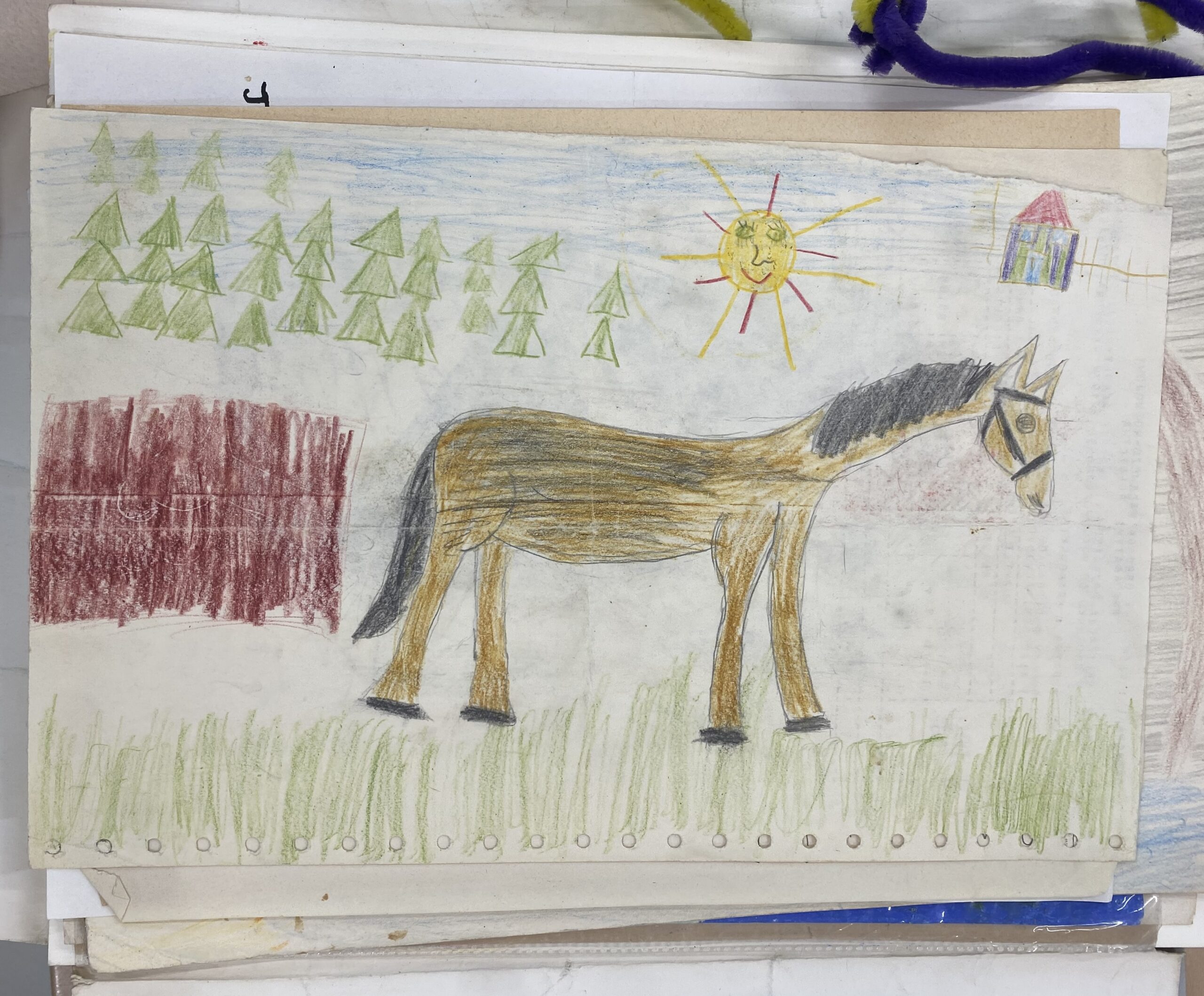
A photo of Alice Reder's childhood artwork, a still from the audiovisual documentation of Reder's holdings, shared by Alice Reder and stored at QWIEN, © Guilherme Maggessi, Rafał Morusiewicz
1980s in Warsaw
After my parents separated, my father lived in Warsaw for several years, mostly in the Praga-Północ district, very run-down, with dilapidated pre-war tenement houses, dark courtyards, and local drunks hanging out in doorways. The district had a specific tradition and atmosphere. Dad loved this area and felt comfortable there.
Dad held various professional positions. For a short time, he was the impresario of a chamber orchestra. He worked part-time as a translator, translating books from Polish into German. His vocabulary was incredible; even later, when he lived in Vienna and spoke Polish only with me, he still spoke it brilliantly. He might have made a minor grammar error occasionally.
During his years in Warsaw, my father worked the longest for Ludwig Zimmerer, a German journalist with a large collection of folk art. His job involved traveling around Poland and buying works of art from amateur artists. He knew how to talk to them, how to build relationships with them: they were mostly simple people, sometimes with mental issues, traumatized by World War II. I remember, for example, one story about a sculptor who, since the war, was constantly afraid of being beheaded, which is why he sculpted heads and buried them in various places on his farm. Zimmerer had funds to support these artists, to buy them the things that they needed. Some of them were suspicious and not interested in selling anything; they sculpted out of internal need, “from the heart,” not for profit. This is why, Zimmerer needed my father, who could build relationships with them. It was an extraordinary job. My father enriched Zimmerer’s collection, he organized and documented exhibitions. I had seen the collection a few times, it was housed in a beautiful villa in Warsaw’s Saska Kępa. Paintings were literally everywhere, on every surface from ceiling to floor, on every wall, on every door, on every shelf. There were also countless sculptures, carvings, wooden statuettes. I remember the basement door, which consisted of three sets of doors, one above the other, opening like a sort of triptych; on each side of each door hung large bas-reliefs. Unfortunately, my father had this job only for a few years: Ludwig Zimmerer had a stroke, and the gallery practically ceased to exist. It was passed to his last wife. My father always talked about Ludwig as his mentor, whom he greatly valued and respected.
Artistic interests
Art was always around my father: in the form of music, paintings, sculptures, theater, books, and albums. He always had them all around him in his apartments, both in Poland and Austria.
My dad was fascinated by the figure of Christ in art. He sculpted it several times, and had its figurines in various sizes and forms. In Warsaw, he regularly went to the Cepelia shop in the Old Town. All the shop assistants working there knew him. When we were there during his last visit to Poland, he found a “Christ” carved by Roman Śledź, an artist that Dad had known since his days working for Ludwig. He was very happy about this finding. There were many figures of Christ in Polish folk art, which often had a religious character, but without pious pomposity. Dad not only bought figurines of Christ in various places, but he also found them in cemeteries, abandoned, half-broken, lying around dilapidated graves. Now I think that this fascination may have been related to his overall interest in suffering and death: these themes recurred in everything that he created, including his collages and costumes that he sewed for Live-Ball events in Vienna. While my father was always strongly critical of the institutional church, he talked a lot about God, particularly in the last years of his life. So it isn’t that obvious that my father didn’t believe in God.
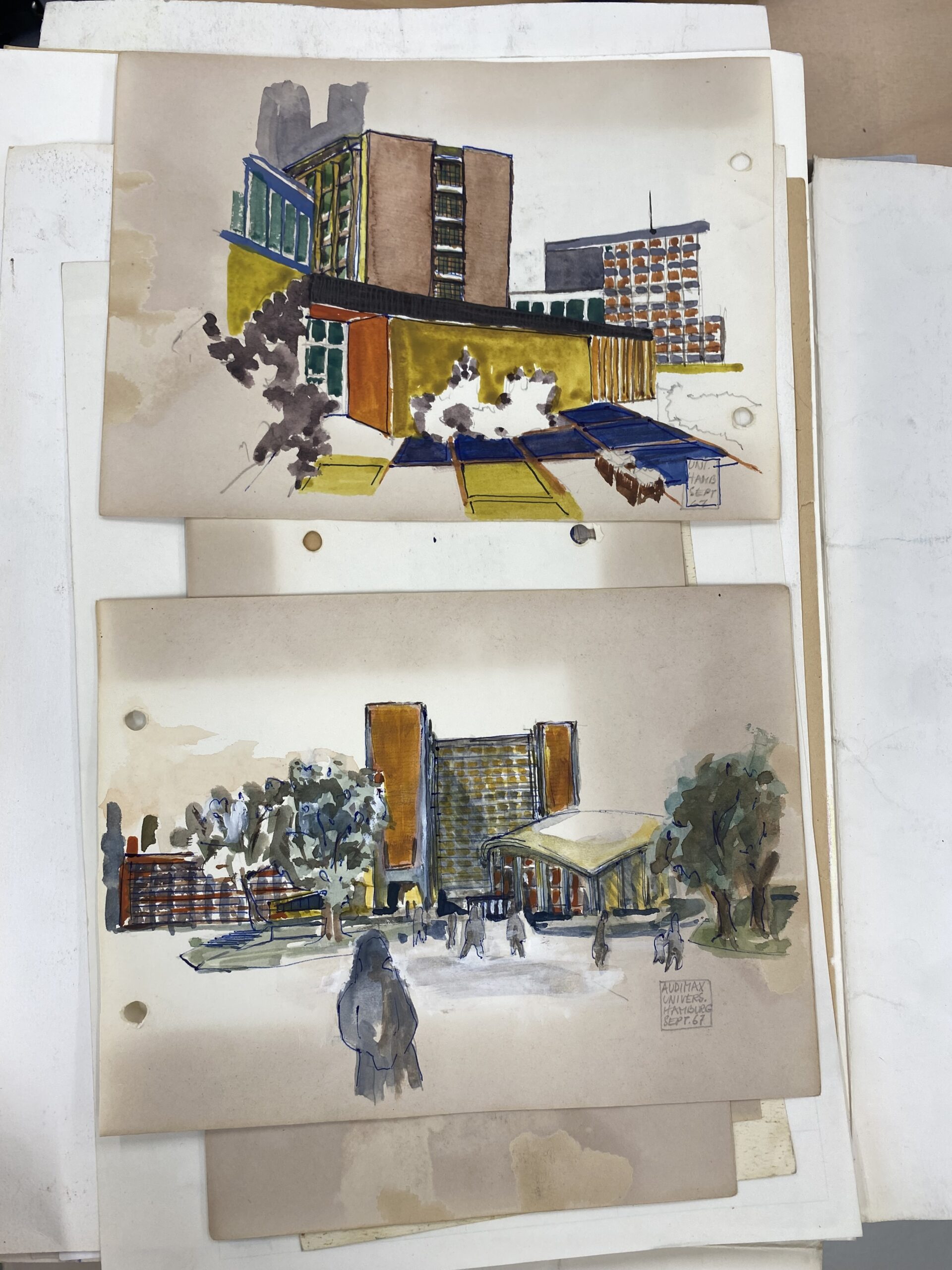
A photo of Wolfgang Reder's drawing, a still from the audiovisual documentation of Reder's holdings, shared by Alice Reder and stored at QWIEN, © Guilherme Maggessi, Rafał Morusiewicz
Back in Vienna
My dad lived in Poland until 1986, when he was suddenly ordered to leave the country. When he left, he could only take with him what the authorities allowed. I even had a list from him, listing books, towels, and other items he could take. I was 12 when we had to say goodbye, and we didn’t know when we would see each other again. My dad couldn’t return to Poland, and I didn’t have a passport or my mom’s permission to visit him. I still don’t know why he had to leave Poland. I recently discovered that the archives of the former Security Service in Siedlce contain files from several years of observing him. My dad had friends from Solidarity and always spoke of freedom and democracy, which certainly displeased the authorities at the time. The specific reason for his expulsion was never given to me; perhaps I’ll find it in those files.
Dad’s new beginning in Austria was difficult. He left Poland together with Piotr, who had been sent to a transit camp as a foreigner, and Dad returned to his family, to the bourgeois environment he had abandoned for many years. He tried to reinvent himself as an architect. He worked primarily for the renowned Austrian architect Hermann Czech. He built a school, repaired windows in the Vienna Opera House, coordinated the renovation of a historic church, and then designed a bookstore. But working in a design office exhausted and stressed him. Working in his profession, after a long break, required computer skills, and Dad was unable to learn new programs. And the depression he had been battling for many years certainly didn’t help Dad face new challenges. After a while, Dad quit his job and lived on unemployment benefits, which, along with an inheritance from his parents, covered his needs. For a long time, Dad was involved in helping people with AIDS. He also completed small architectural projects.
This was also the time when his gay life flourished. His father went to clubs, threw parties at home, and had lots of new friends. Every year, he celebrated his birthday on August 17th, and each year he sent a specially designed invitation to his guests, in the form of a collage. These were little works of art. His birthday parties were famous among Viennese gay society. His grandmother, his mother, also sometimes came to these parties. Grandma was of Hungarian descent, who, as a very young girl, married a right-wing Austrian businessman. Grandma lived in the conventions of the old days, never liberating herself from them, but just as on the one hand there was her law-abiding husband and the Kronen Zeitung, on the other, she was surrounded by the gay aesthetic, which appealed to her. Grandma never worked, she didn’t finish college, because those were the times: her husband earned the money, he ran the company. Elegance, beautiful clothes, reading Vogue, and listening to opera were incredibly important to her. My dad sometimes took his friends to my grandmother’s beautiful apartment in the center of Vienna and organized social gatherings at my grandmother’s. My grandmother allowed my friends to try on fur coats, hats, and high heels, which, as an elderly woman, she no longer wore. My dad had a great fondness for my mother; they had a lot in common, a similar sensibility. He cared for her until the end of her life. Every year, he went with her to Paris, where his sister lived, or to the island where our family had a summer house. My dad would go with my grandmother to fashionable designer shops in Paris, where they would browse the latest fashion collections but never buy anything. I even remember one time, as a young girl, when I was in Paris with them and I was embarrassed because my dad would just walk into these elegant shops, look at clothes, and try them on. I thought it was such a shame, because we wouldn’t buy anything there anyway.
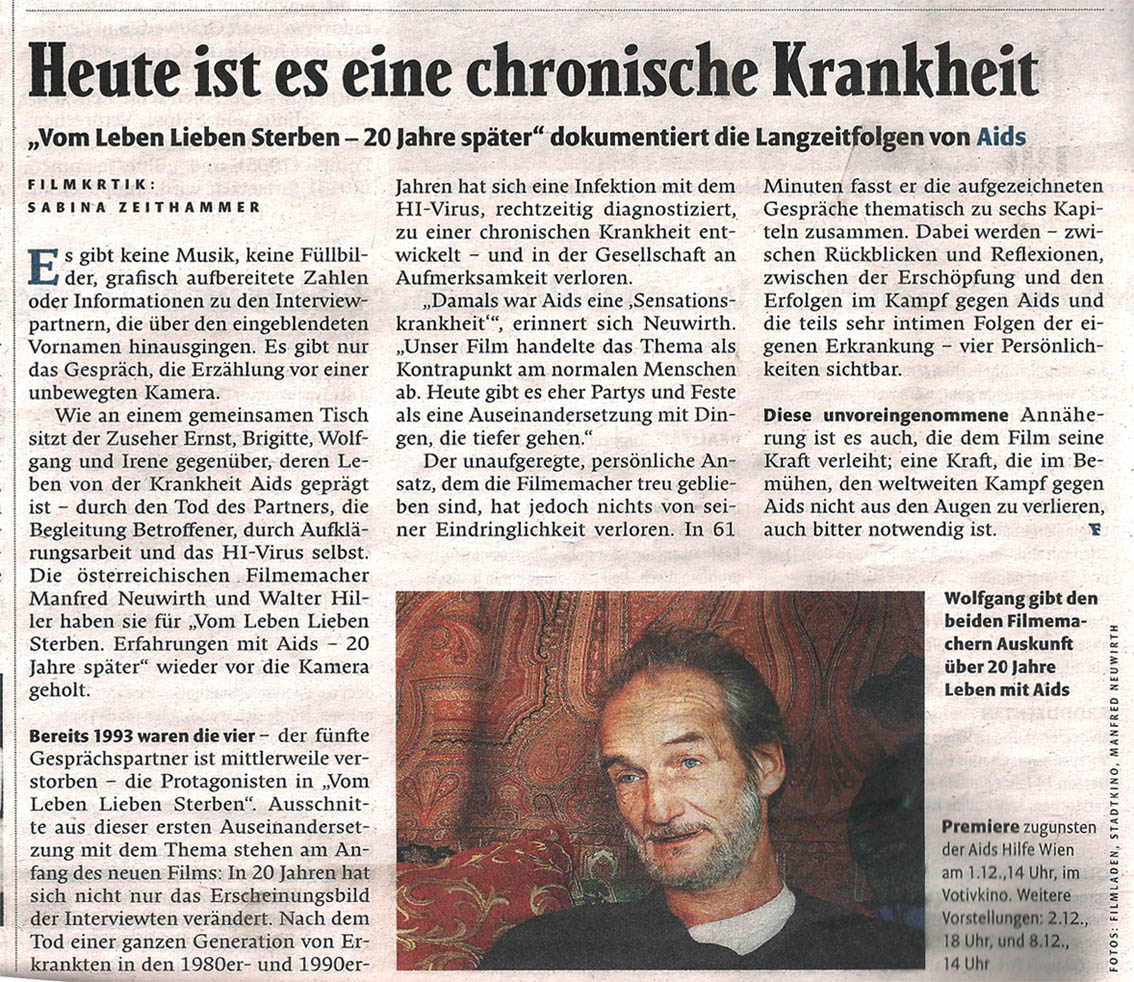
A photo of a newspaper excerpt about "Vom Leben Lieben Sterben – 20 Jahre Später" (dir. Manfred Neuwirth, Walter Hiller, 2013), a still from the audiovisual documentation of Reder's holdings, shared by Alice Reder and stored at QWIEN, © Guilherme Maggessi, Rafał Morusiewicz
Collages
In later years, my dad fell in love with Photoshop. Funny enough, just as he hadn’t been able or even wanted to design on a computer before, working with it became his passion in everyday life. He made collages in Photoshop, collected pornographic photos and photographs of works of art, and cataloged them all. It was his way of relaxing, perhaps calming down. Usually, when I visited my dad and stayed with him for a few days, I’d see him sitting down after breakfast with coffee and sorting through another batch of photos. Previously, I associated male pornography with someone flushed, “under the covers,” looking at magazines with naked men, while he arranged photos of naked boys in catalogs as if he were arranging beads into various boxes.
My dad loved making collages, which had a unique style. They were often based on a familiar image, to which he would add new elements in Photoshop. He loved presenting collages to family and friends for various occasions. My grandmother once received a collage with her at the center, in a beautiful ball gown, surrounded by a wreath of angels and naked boys.
There was also a time, shortly after leaving Poland, when my father traveled the world. I have an entire collection of postcards from him, from various places. These cards were never random; they were always beautiful, aesthetically pleasing, often art-related. He also had a passion for photography; he had albums full of his own photos. He also had many art albums at home. He bought them when he went to exhibitions. He wasn’t particularly fond of modern art, which is evident in his collages, which reference classical painting. The last exhibition he attended was probably a large Velasquez exhibition at the Kunsthistorisches Museum. My father was in a wheelchair; we entered through the back entrance for disabled people. He was very pleased, because he was one of the painters he really liked.
Costumes, Fabrics, Furniture
My father attended Live Balls every year. He would wear beautiful costumes that he sewed himself, often complete outfits with headgear and additional props. He would begin preparations at least two months in advance. Sewing was his passion. He was skilled at it. He enjoyed going to good fabric stores. He wasn’t wealthy, so he often bought expensive fabric leftovers or upholstery material, which he would turn into into outfits that were often reversible or had pieces of various material sewn in. His costumes were usually unfinished: not everything was sewn together, there were single threads sticking out. The costumes always looked incredibly interesting and intriguing. They were often complex designs, like a three-breasted suit consisting of a jacket, waistcoat, and trousers. I also remember one beautiful Baroque suit, with pumped trousers, made entirely of bubble wrap. My father sewed a lot, but mainly for himself. He said there was no point in making things for sale, because he spent so much time on them that there was no telling how much money such an outfit would cost. He was very proud to wear something he had made himself. Although he didn’t care about his clothes being publicly displayed, he was happy for others to see his work. His dad’s collages were printed in enormous sizes and hung on the walls of the ballroom during one of the Live Balls at Vienna City Hall. Dad was so proud of these gigantic prints of his work back then!
My dad was an incredibly handsome and sensitive man. I really like this picture of him. It was his armchair. He always smoked cigarettes and was incredibly outraged when all the smoking bans were introduced. On the front door of his apartment, he had pictures of various artists smoking cigarettes and a sign that read, “You can always smoke here.” He also loved the sun; he was always tanned, went to the Lobau Lake, where he sunbathed naked. He also sunbathed on the balcony. While he liked dressing up for parties, his everyday clothes were neutral: neither overly masculine nor unmanly. Sometimes he wore black, but often he wore bold colors and patterns, with animal motifs. He also loved folk costumes. There was a time when he wore beautiful shirts with embroidery. He also knew how to knit. In Poland, when he had Podhale sheepdogs, he once collected a large quantity of their fur and had it spun. Although there wasn’t enough for a whole sweater, half the sweater was made of dog hair, and the other half was sheep’s wool. He also loved fabrics; he had plenty of them in his apartment, on the walls, and on the furniture. When he lived in Poland, he collected Silesian scarves. He went, for example, to the Koło in Warsaw. It’s a vintage market with a long tradition. He had friendly sellers there, from whom he bought Silesian scarves. Unfortunately, most of them were moth-eaten. Later, in Vienna, whenever he had the opportunity, he bought fabrics not only for sewing but also for sofa upholstery or to hang on the wall. He liked to surround himself with beautiful things, even though he had little money and always lived very modestly. He preferred to buy something nice, rarely, but for a long time, saving up for a vase, a vase, or glasses. He was a great aesthete, and his apartment in Vienna had a unique character. He had, for example, an original metal lamp from the Filmcasino, which he adopted after the cinema renovation. It also had a huge, two-story Murano crystal chandelier that once hung in my grandparents’ villa. And that legendary restroom, which had a huge mosaic of hundreds of photos of naked men covering all the walls and ceiling. It was a work of art. It was hard to concentrate in that restroom, because there was so much to see.
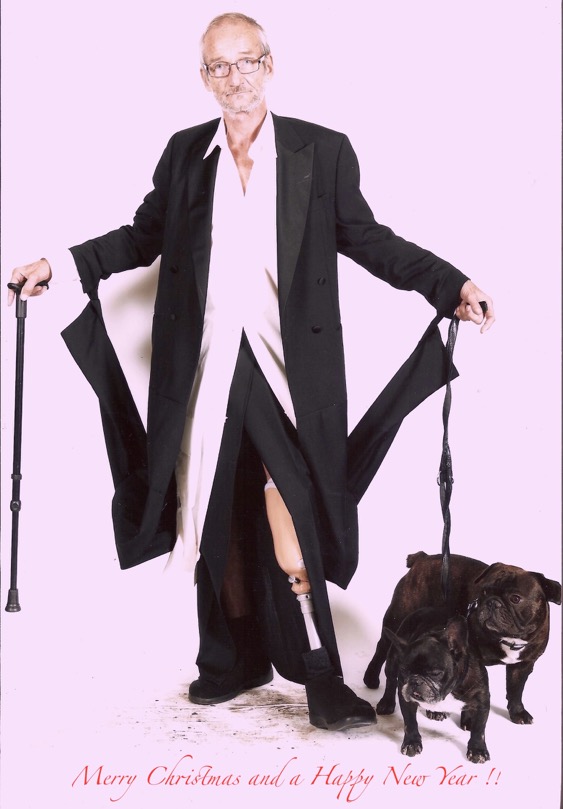
A photo of Wolfgang Reder's postcard, presenting him and his two dogs, a still from the audiovisual documentation of Reder's holdings, shared by Alice Reder and stored at QWIEN, © Guilherme Maggessi, Rafał Morusiewicz
Dogs, Plants, Flat
His love for dogs was lifelong. During the honeymoon with my mother, he traveled to North Africa in a Beetle with two dogs, including a Tatra Sheepdog. His parents bred them in Poland. Some years later, he received an Irish Wolfhound from his sister, a gigantic dog, then he had another two, then some more puppies. In Vienna, the French bulldog era began: first “Mimi,” then “Mimi II,” then “Everett.” Dad was a recognizable figure in the neighborhood, a slender, unusually dressed man with a prosthetic leg and two bulldogs on leashes. Besides dogs, he also had cats, various strange fish, and for some time, even birds, which kept on escaping from their cages. For these birds, he had a beautiful three-tiered cage with a removable “cap,” which he found in a Chinese furniture store.
And then there were flowers. Flowers were his passion: cut flowers, bouquet flowers, potted flowers, plastic flowers. For years, his apartment had an open balcony, which got enclosed after the building’s facade was renovated. If you walked toward Hollandstrasse from the side of the canal, you could immediately tell where he lived: his balcony was one giant green blob, it was bursting with vegetation! Dad adored tending to plants, he would water and re-pot them day and night. He also had plants inside. There was one arrangement I particularly admired: several potted plants, a small pond, and a fountain.
In 2007, Dad received a considerable sum of money from the sale of his parents’ apartment and undertook a major renovation, a complete remodeling of his apartment. He demolished some walls and built new kitchen units. He was proud of the results of his work. At some point, towards the end of his life, my father decided that he had too much stuff and started clearing out everything. I was amazed at how well he prepared for his departure. He took the apartment’s inventory, created a catalog with photos of the rooms and all the objects, which he numbered and labeled with information about where each item came from, how much it cost, and who made it.
Friends
Back in Poland, during the Communist era, my dad’s house was always full of acquaintances. He had a wonderful group of friends there, whom he loved dearly. Back then, people in Poland lived differently, closer together. They would drop in unannounced, and when they did, they usually stayed until dawn. Later, when my dad came to visit Poland—I don’t remember exactly when, probably after 2000—he didn’t find that world anymore. Of his closest friends, a handful remained; the others were either constantly in a rush somewhere or they were raising their grandchildren. Another thing is that my dad was not an easy friend or acquaintance. He was very friendly, but he required deep, genuine connections. He wasn’t interested in just getting together and talking about the weather. He wanted in-depth conversations about life, about what one’s passions, emotions, and serious issues. He was a wonderful conversation partner. He had a sense of humor. On the one hand, conversations with him were serious; he was highly critical and always resorted witty irony. He disliked superficiality. He sustained personal relationships with everyone, including animals and children, whom he treated as adults. Me too, from a very young age, I felt that he treated me seriously. I remember that, as a child, I was fascinated whenever he would return from his trips to Warsaw and telling me in detail, for an hour or so, what film he’d seen at the cinema. He was an erudite, extremely knowledgeable about art and culture. He was well informed about what was happening in the world. Though in recent years, he read less and watched more television, particularly nature programs, which brought him joy and calm. Sometimes, he would send me videos or photos of animals. He loved great apes, and so I received many postcards from him with orangutans and gorillas. He loved giraffes. In the following years, our relationship became a bit more difficult. When I had children, it turned out that my dad wanted to maintain a relationship primarily with me, and that the children were more of a hindrance. I thought he’d be a wonderful grandfather, but this was not what he wanted.
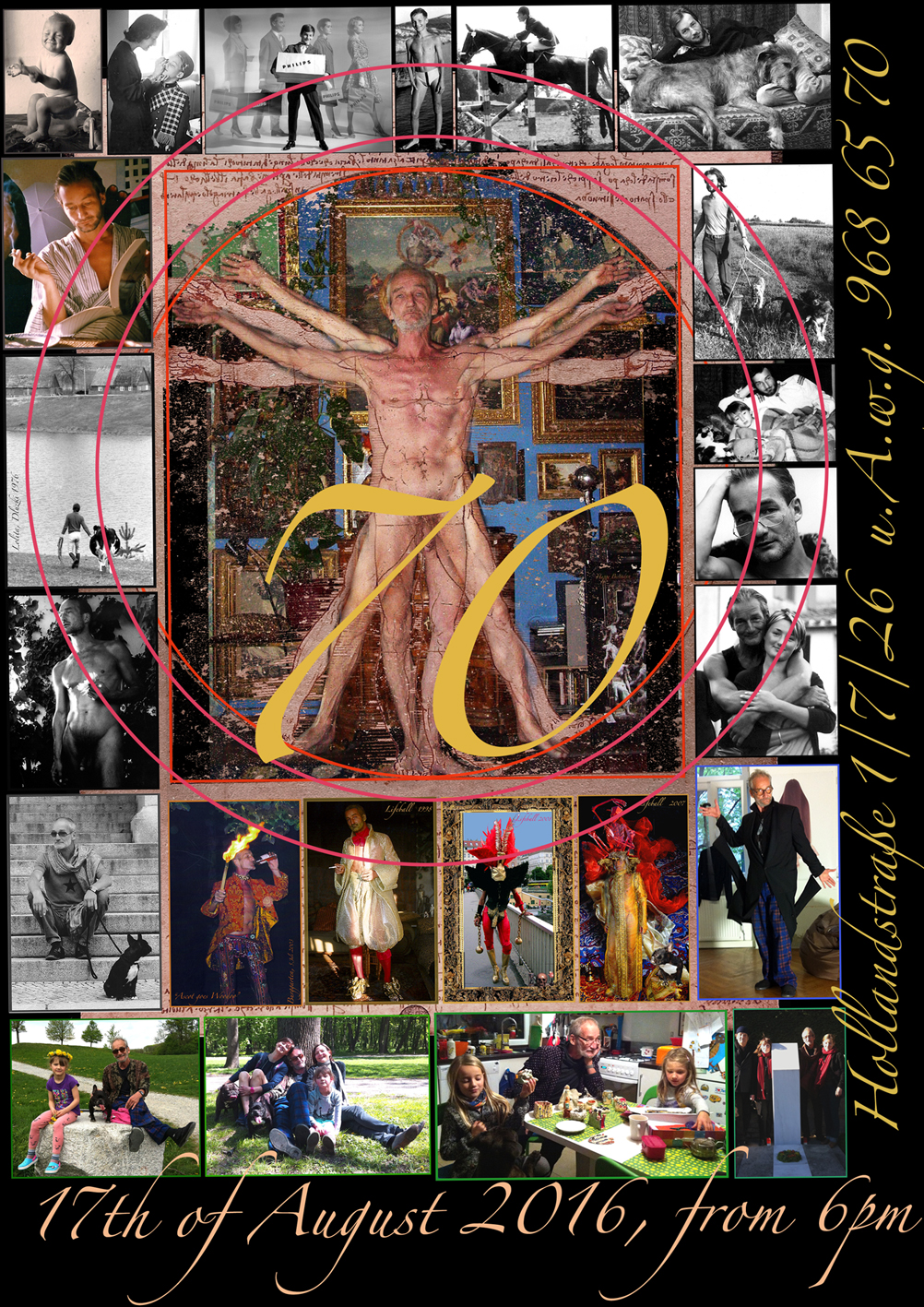
One of Reder's yearly birthday party invitation postcards, a still from the audiovisual documentation of Reder's holdings, part of Alice Reder's collection estate, stored at QWIEN, © Guilherme Maggessi, Rafał Morusiewicz
Final years
Dad’s final years were probably not happy. He had increasing issues with blood vessels. He suffered from arterial stenosis and ischemia in his lower limbs, and, on top of that, depression, which he had learned to live with. Sadness constantly accompanied him. In 2003, one of his legs was amputated. While he would gradually feel worse and have less energy, he did recover pretty quickly and started coping. Immediately after the surgery, he used a wheelchair, but he soon learned how to walk with his artificial leg and a cane. I had the impression that he quite enjoyed showing off how he handled living with his prosthetic leg. His prosthesis didn’t pretend to be a real limb: it was a metal tube with a foot shaped at the end. It was a bit his way of showing off, “Look, I’m a little different, but I’m coping.”
Probably due to his health problems, to the pain he was experiencing, he became more demanding of his friends. If someone he knew didn’t maintain a sufficiently deep relationship with him, he would explicitly point it out, which led to conflicts. This is why, toward the end of his life, he was quite lonely. His circle in Vienna was dwindling. He had a few close friends, but the ongoing social gatherings, costume parties, and conversations over wine until dawn had ended. Though most of his friends were younger, they too had aged, and so their relationships weakened. He himself became quieter. He no longer wanted to take long trips. He chose to spend time in the company of the few closest people. I think that old age is generally sad, that you need an extraordinary inner joy to bear it with a smile. My father’s energy was fuelled by the company of others. He still had some romantic flings, but he didn’t seem to really need anyone. Besides, a long-term partner would probably disturb the “kingdom” he had at home, which would eventually annoy him.
Daily rituals were important to him. He was always a “night owl.” He didn’t like waking up early, he started his mornings slowly. He’d eat breakfast, take the dogs for a walk, then do some computer work. At noon, he’d have a cappuccino and a glass of Gurktaler. In the afternoons, he enjoyed making collages or arranging photos while watching nature documentaries on TV.
Although my father passed away eight years ago, in 2017, I still miss him very much. Most of all, I miss talking to him, because he was an attentive listener, sensitive, wise, brilliant, and funny. I wish I could call and talk to him again…